


Massage Gun vs. Foam Roller: Which Recovery Tool Is Right for You?
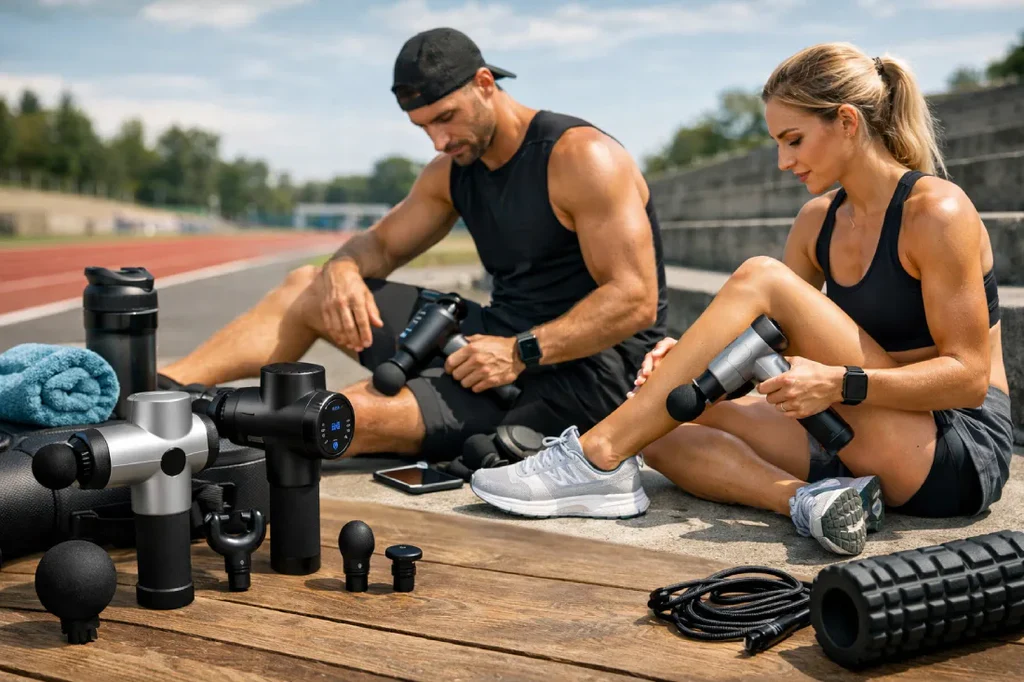
If you've stepped foot in a gym anytime in the last five years, you've seen them both: the massage gun buzzing away in the corner, and the foam roller being wrestled with on the mat. Both are marketed as essential muscle recovery tools — but they work in fundamentally different ways.
So which one deserves a spot in your gym bag? Let's break it down with zero fluff.
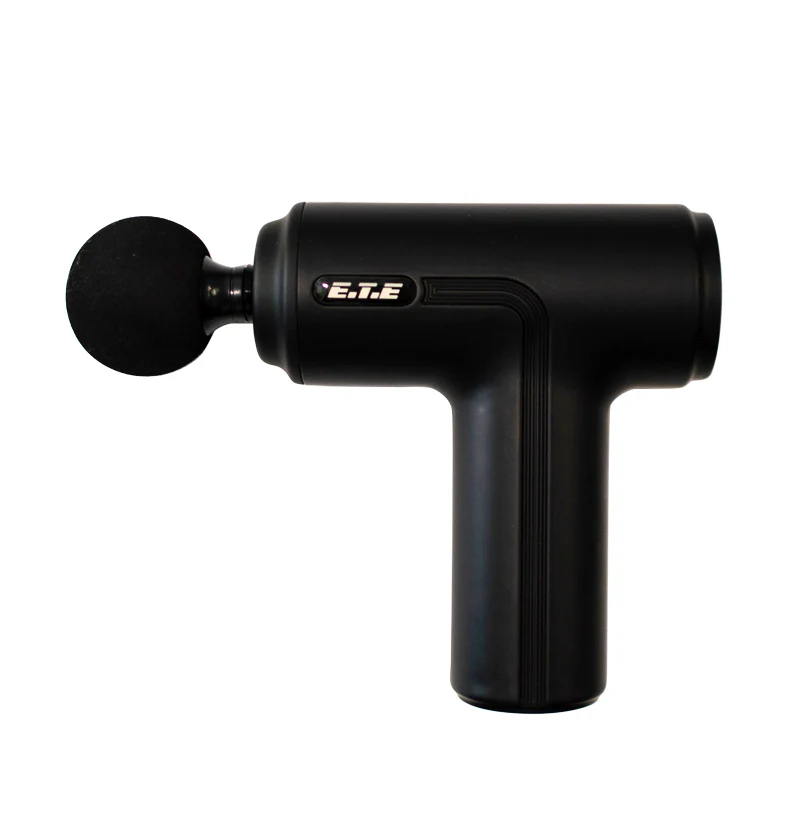
Massage Gun
Delivers rapid, targeted pulses (up to 3200 RPM) deep into muscle tissue using a motorized head.
Best for: Precision & Speed
Foam Roller
Uses your own body weight to apply sustained pressure across large muscle groups via rolling motions.
Best for: Broad Release & BalanceHead-to-Head Comparison
| Feature | Massage Gun | Foam Roller |
|---|---|---|
| Recovery Method | Percussion / vibration | Compression / myofascial release |
| Depth of Pressure | Up to 16mm deep | Surface to mid-layer |
| Targeting | Precise (point-specific) | Broad (full muscle group) |
| Time Needed | 2–5 min per area | 5–10 min per area |
| Effort Required | Low | High |
| Portability | Excellent | Moderate |
| Noise Level | 40–65 dB | Silent |
| Price Range | $30–$500 | $10–$80 |
| Best For | Knots, trigger points | Large-area fascia release |
Pros & Cons: The Honest Truth
thumb_up Massage Gun Pros
- Targets specific knots and trigger points with surgical precision
- Requires zero physical effort — the gun does the work
- Extremely fast sessions (5 min total body)
- Multiple heads for different muscle groups and needs
- Portable enough for gym bag, office, or travel
thumb_down Massage Gun Cons
- Can be noisy (especially budget models)
- Higher upfront cost than a foam roller
- Requires charging — dead battery = no recovery
- Improper use can cause bruising or nerve irritation
- Doesn't engage core stability like rolling does
thumb_up Foam Roller Pros
- Excellent for large-muscle fascia release (quads, back, IT band)
- Engages core and stabilizer muscles during use
- Ultra-affordable — no batteries, no charging
- Completely silent — use anywhere, anytime
- Doubles as a balance and mobility tool
thumb_down Foam Roller Cons
- Can't isolate specific trigger points effectively
- Requires significant effort and body weight management
- Time-consuming — full body routine takes 20–30 min
- Can be painful, especially for beginners
- Hard to reach upper back and neck without assistance
When to Use Each Tool
The truth? The best answer isn't "either/or" — it's "both, strategically." Here's a simple decision framework:
Grab the massage gun when: You have a specific knot that's been bothering you for days, you're short on time between sets, you need to warm up a muscle group before training, or you're targeting small areas like the forearms, feet, or neck.
Grab the foam roller when: You want a full-body myofascial release session, you're working on large muscle groups like the quads or thoracic spine, you want to build core stability while recovering, or you're in a quiet environment (hotel room, office) where noise matters.
gavel The Verdict
If you can only buy one: get a massage gun. It's more versatile, faster, and requires less effort — making you more likely to actually use it consistently. That said, adding a $20 foam roller to the mix gives you the best of both worlds for a complete muscle recovery system.
Build Your Recovery Kit
Shop our curated bundles of massage guns, foam rollers, and recovery accessories — all at unbeatable prices.
Shop Recovery Tools →


